David Schmitt · 15 September 2026
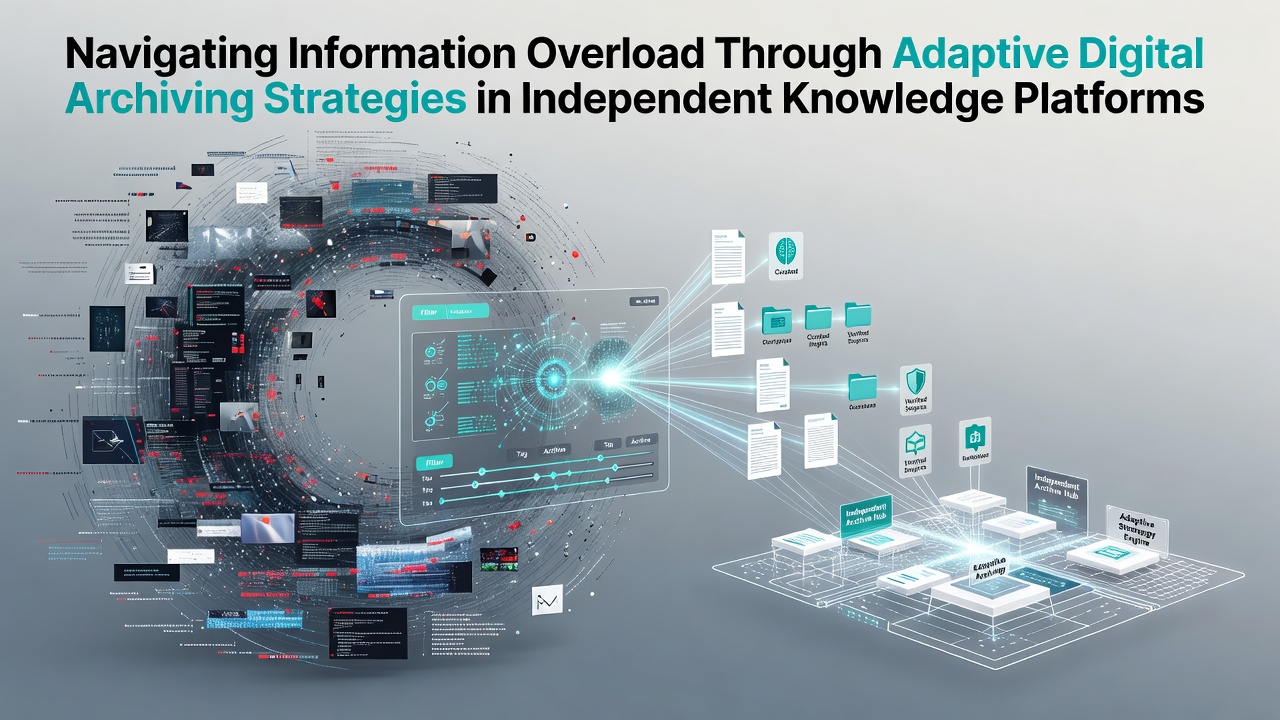
Navigating Information Overload Through Adaptive Digital Archiving Strategies in Independent Knowledge Platforms
Independent knowledge platforms face mounting challenges as data volumes expand rapidly across digital spaces and users encounter increasing difficulty locating relevant material amid constant streams of new content. Research from academic institutions shows that daily information production has grown exponentially in recent years and this trend continues to accelerate into 2026. Adaptive digital archiving offers structured approaches that help platforms manage these volumes while preserving access to essential resources over extended periods.
Understanding the Scale of Digital Information Growth
Data from multiple sources indicates that global digital content creation reached new records by early 2026 and independent platforms often absorb significant portions of this output without dedicated filtering mechanisms. Observers note that researchers and contributors upload materials at rates that exceed traditional storage and retrieval capacities in many decentralized systems. According to studies conducted across European research networks, users spend substantial time sifting through duplicates and outdated entries which reduces overall platform efficiency and discourages sustained participation.
Yet platforms that implement layered archiving protocols demonstrate measurable improvements in retrieval speeds and content relevance. These systems rely on automated classification combined with user-defined criteria to prioritize materials that align with specific knowledge domains. Figures from Australian digital preservation initiatives reveal that selective retention policies can reduce storage demands by up to forty percent while maintaining high accessibility standards for core documents.
Core Components of Adaptive Archiving Systems
Effective strategies begin with metadata enrichment that attaches contextual tags during the upload phase rather than after accumulation has already created disorder. Independent platforms benefit when these tags incorporate temporal markers, source verification, and thematic connections that allow future queries to surface related clusters automatically. Machine learning models trained on domain-specific datasets further refine these processes by identifying patterns that human moderators might overlook during high-volume periods.
Another element involves tiered storage allocation where frequently accessed items remain in rapid-retrieval environments while less active resources move to compressed archives with clear indexing. This approach aligns with practices documented in Canadian government digital records programs that emphasize cost-effective longevity without sacrificing search functionality. Platforms adopting such models report sustained user engagement because navigation remains intuitive even as total holdings expand.

Implementation Patterns Across Independent Platforms
One study revealed that platforms integrating real-time feedback loops between contributors adn archiving algorithms achieve higher accuracy in content categorization over successive iterations. Contributors receive prompts to validate or adjust automated tags which strengthens the underlying data structure without requiring centralized oversight. Those who've studied decentralized systems note that this collaborative layer reduces errors that arise when algorithms operate in isolation from subject matter experts.
Integration with external standards also plays a role. Platforms that align internal schemas with established frameworks from international bodies such as the UNESCO digital heritage guidelines gain interoperability advantages that facilitate cross-platform sharing. This alignment proves particularly useful when independent sites seek to aggregate materials from multiple origins while preserving original context and attribution details.
Monitoring and Adjustment Mechanisms
Continuous evaluation forms the backbone of adaptive strategies because static rules quickly become outdated as content types evolve. September 2026 updates from research consortia highlight new metrics that track query success rates alongside user retention patterns and these indicators help platforms recalibrate archiving thresholds dynamically. Tools that visualize these trends allow administrators to identify emerging bottlenecks before they affect overall performance.
Case examples show that platforms incorporating quarterly audits of archived sections maintain fresher indexes and minimize retrieval failures. Audits often combine automated scans with targeted human review of edge cases where classification remains ambiguous. This hybrid method balances scalability with precision and supports long-term knowledge continuity in environments where contributors rotate frequently.
Conclusion
Independent knowledge platforms that apply adaptive digital archiving strategies create sustainable frameworks for handling expanding information loads while preserving discoverability. Research indicates these methods deliver consistent results across varied scales and content types when supported by regular refinement and alignment with recognized standards. As digital ecosystems continue to develop through 2026 and beyond, the emphasis on flexible yet structured archiving remains central to maintaining functional knowledge repositories that serve diverse user communities effectively.