Logan Patterson · 13 October 2026
Semantic Layering Techniques for Dynamic Knowledge Integration in Standalone Digital Libraries
Standalone digital libraries operate without reliance on external networks yet they must still accommodate growing volumes of heterogeneous data that arrive over time, and semantic layering techniques provide the structured mechanisms that allow these systems to reorganize internal representations without constant manual intervention.
Researchers have documented how these layers sit between raw storage and user-facing applications so that new documents or metadata updates receive automatic classification through predefined ontologies while older records remain accessible through the same query pathways.
Core Components of Semantic Layering
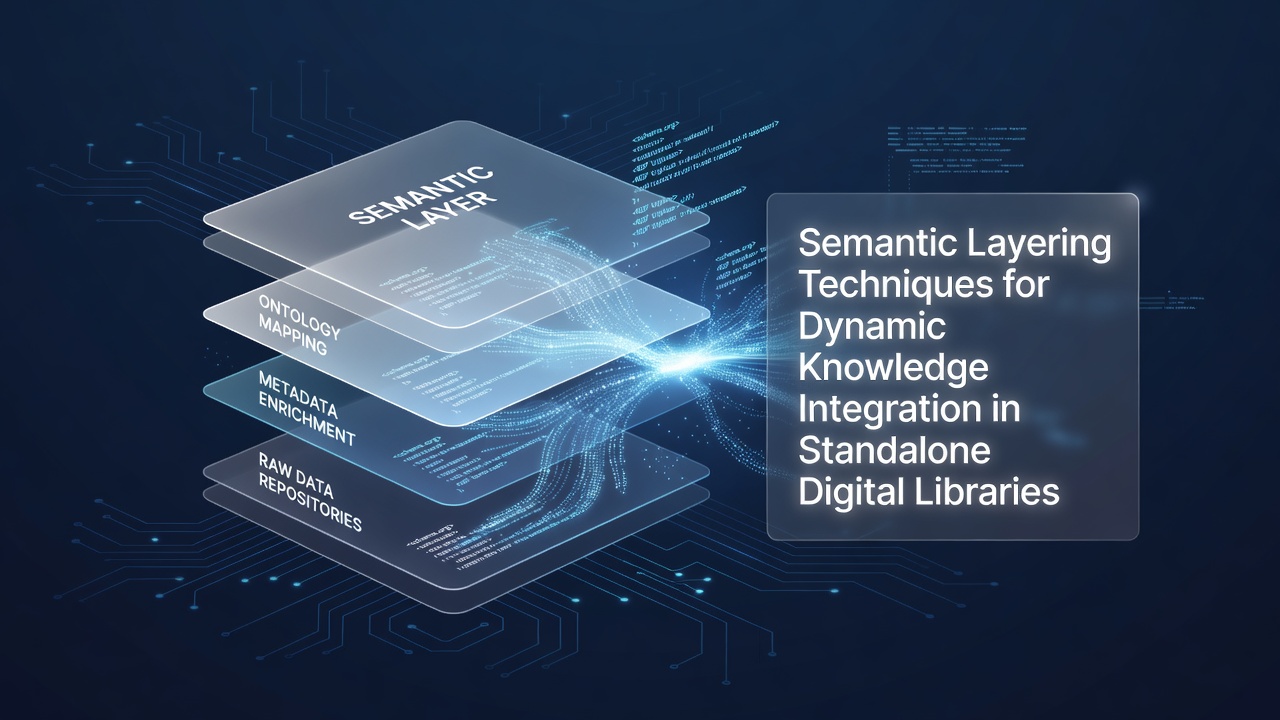
At the base level sits a formal ontology that defines entity types and relationships, above which sits a mapping layer that translates incoming file formats into the ontology vocabulary, and a further inference layer applies rules that generate new connections between existing items whenever fresh content arrives.
Those who have examined independent library deployments note that this tiered arrangement reduces the need for full re-indexing because only the affected layers require recalculation, while the underlying file system stays untouched.
Techniques That Enable Dynamic Updates
One widely adopted method uses Resource Description Framework triples to express every relationship as subject-predicate-object statements that can be added or retracted individually, and another approach relies on lightweight OWL profiles that limit computational cost while still supporting basic subclass and equivalence reasoning.
Additional techniques include incremental embedding updates that adjust vector representations of documents without rebuilding the entire index from scratch, and rule engines that fire only when specific metadata thresholds are crossed, such as when a new author name matches an existing entity through string similarity metrics.
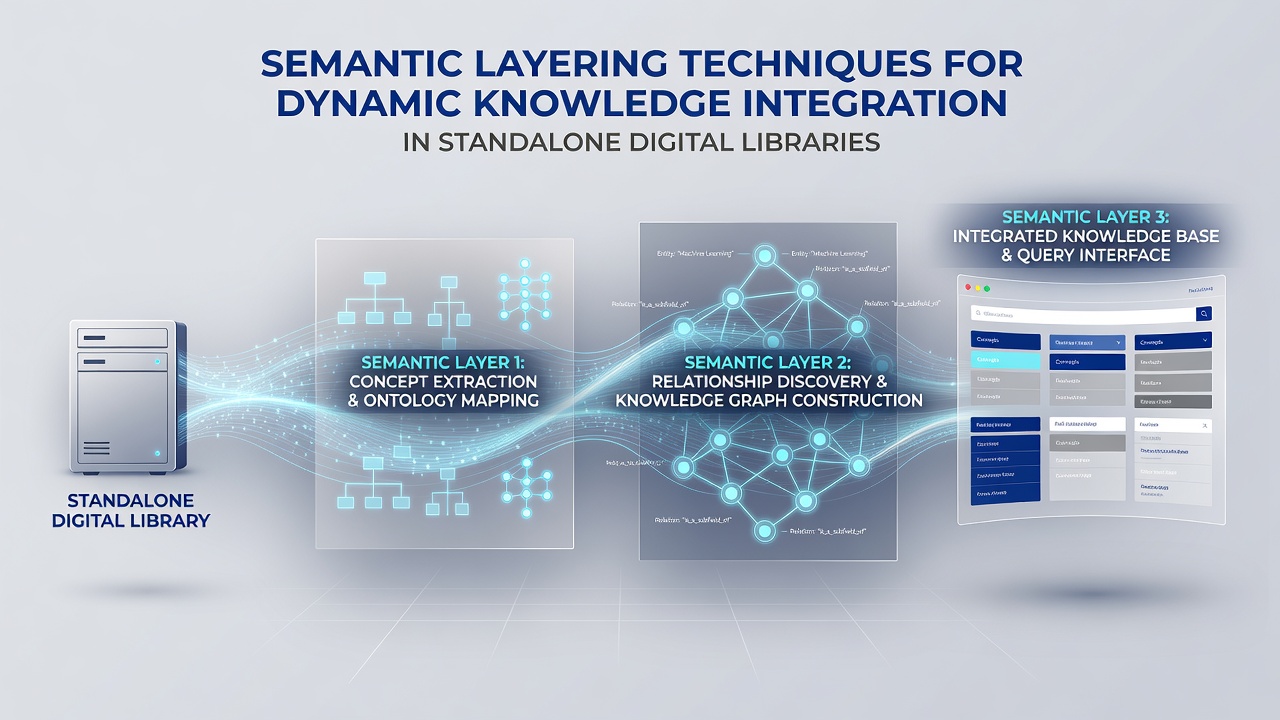
Studies conducted at institutions maintaining large personal archives show that combining these methods allows a single machine to absorb monthly additions of several thousand items while query response times remain within acceptable bounds for local users.
Integration Challenges Specific to Standalone Systems
Because these libraries lack distributed processing resources, every operation must execute efficiently on modest hardware, which leads developers to favor modular layer designs that can be toggled on or off depending on available memory and processor cycles.
Observers have recorded cases where libraries handling mixed media collections adopted hybrid layering that treats textual metadata with full semantic inference while routing image and audio files through lighter annotation layers that only record format-specific properties and basic provenance links.
Developments Reported in October 2026
During October 2026 several research groups released updated toolkits that incorporate improved conflict resolution algorithms for overlapping ontology statements, and these releases coincided with revised guidance from the World Wide Web Consortium on best practices for embedding semantic layers in offline environments.
One project based at an Australian university demonstrated a prototype that completed full layer synchronization for a 250,000-item collection in under four hours on standard desktop hardware, a result that data from earlier benchmarks indicated was previously unattainable without cloud assistance.
Practical Outcomes in Independent Deployments
People maintaining personal research collections have reported that semantic layering permits rapid incorporation of newly digitized materials into existing subject hierarchies without breaking legacy links that point to older file locations, and similar patterns appear in small institutional archives that must comply with long-term preservation mandates while continuing daily ingestion routines.
Figures released by European cultural heritage networks indicate that libraries adopting these techniques experienced measurable reductions in manual metadata correction time, although exact percentages vary according to collection size and the diversity of incoming formats.
Conclusion
Semantic layering therefore functions as a practical bridge between static storage constraints and the need for ongoing knowledge growth inside standalone digital libraries, and continued refinement of inference rules together with hardware-aware optimizations will likely determine how widely these methods spread among independent operators in coming years.