Rosa Hansen · 10 November 2026
The Dynamics of Content Discovery in Personal Web-Based Libraries
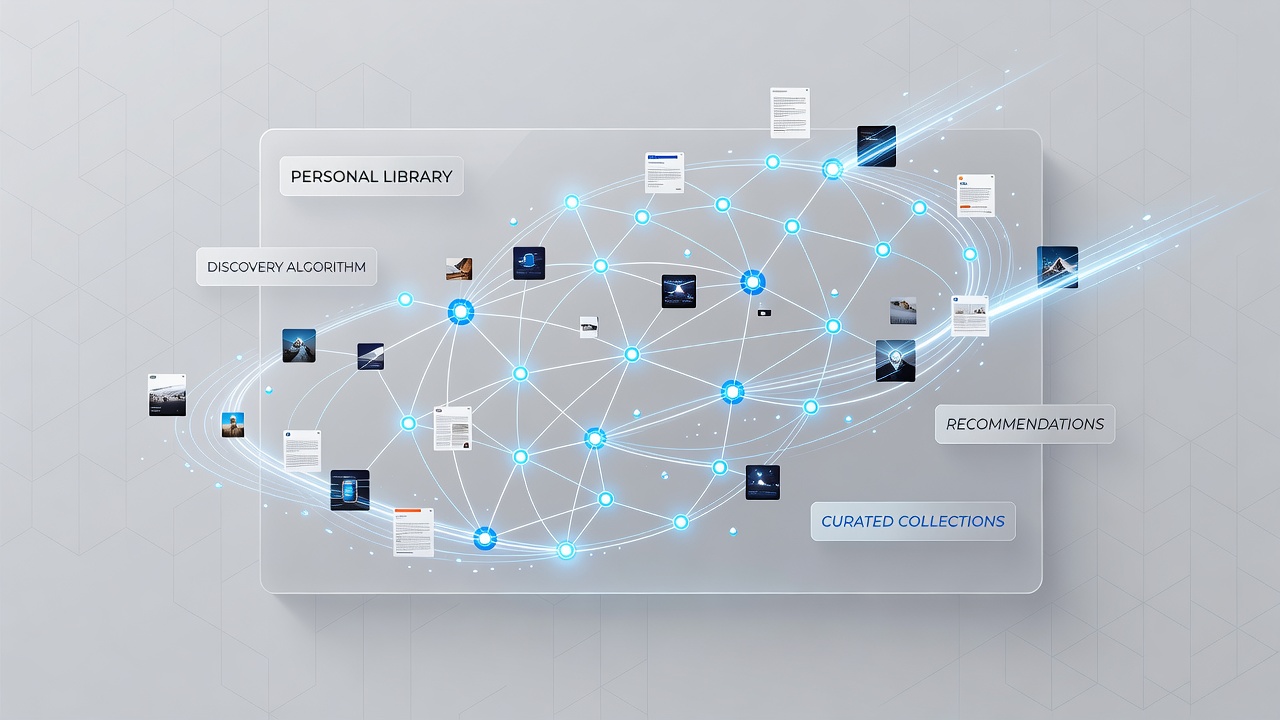
Personal web-based libraries function as individualized repositories where users store, organize, and retrieve digital materials ranging from documents and images to datasets and multimedia files, and content discovery within these systems relies on layered mechanisms that combine manual input with automated processes. Researchers have documented how these libraries differ from institutional archives because ownership rests with individuals who control access levels and metadata schemas, which directly influences how items surface during searches.
Core Mechanisms Driving Discovery
Search functions form the primary entry point, yet they integrate with tagging systems and relational graphs that map connections between files based on shared attributes such as keywords, creation dates, or cross-references. Studies from information science departments show that users frequently combine full-text queries with filter selections on metadata fields, which narrows results more effectively than keyword matching alone. Data indicates that hybrid approaches, where semantic analysis supplements exact string matches, increase retrieval precision in collections exceeding several thousand items.
Algorithms play a supporting role by suggesting related content based on usage patterns, yet these recommendations depend on the quality of initial user annotations. Observers note that when individuals apply consistent descriptors across similar files, recommendation accuracy improves because the underlying models receive clearer training signals. In contrast, sparse or inconsistent tagging leads to fragmented suggestion lists that overlook relevant materials buried deeper in folder structures.
Metadata Structures and Their Impact
Metadata serves as the backbone for efficient navigation, and standards such as Dublin Core or custom schemas allow owners to define fields that match their specific domains. Research indicates that libraries employing extensible metadata formats enable more granular filtering options during discovery sessions. Those who have examined large-scale personal collections find that structured fields for authorship, topic hierarchies, and temporal markers reduce the time required to locate specific resources by measurable margins.
One study revealed that distributed archives benefit when metadata travels alongside files during exports or shares, which preserves context even when items move between platforms. This practice supports long-term discoverability because external viewers or future iterations of the library retain the original descriptive layers. Experts have observed that without such portability, migration events often strip away critical context and force manual re-tagging efforts.
User Behaviors and Interaction Patterns
Individuals interact with their libraries through recurring workflows that blend browsing, targeted searches, and serendipitous encounters triggered by visual thumbnails or timeline views. Figures from user analytics platforms reveal that session lengths vary according to collection size, with larger libraries prompting more frequent use of advanced filters. People often discover unexpected connections when browsing chronologically sorted items rather than relying solely on topical searches.
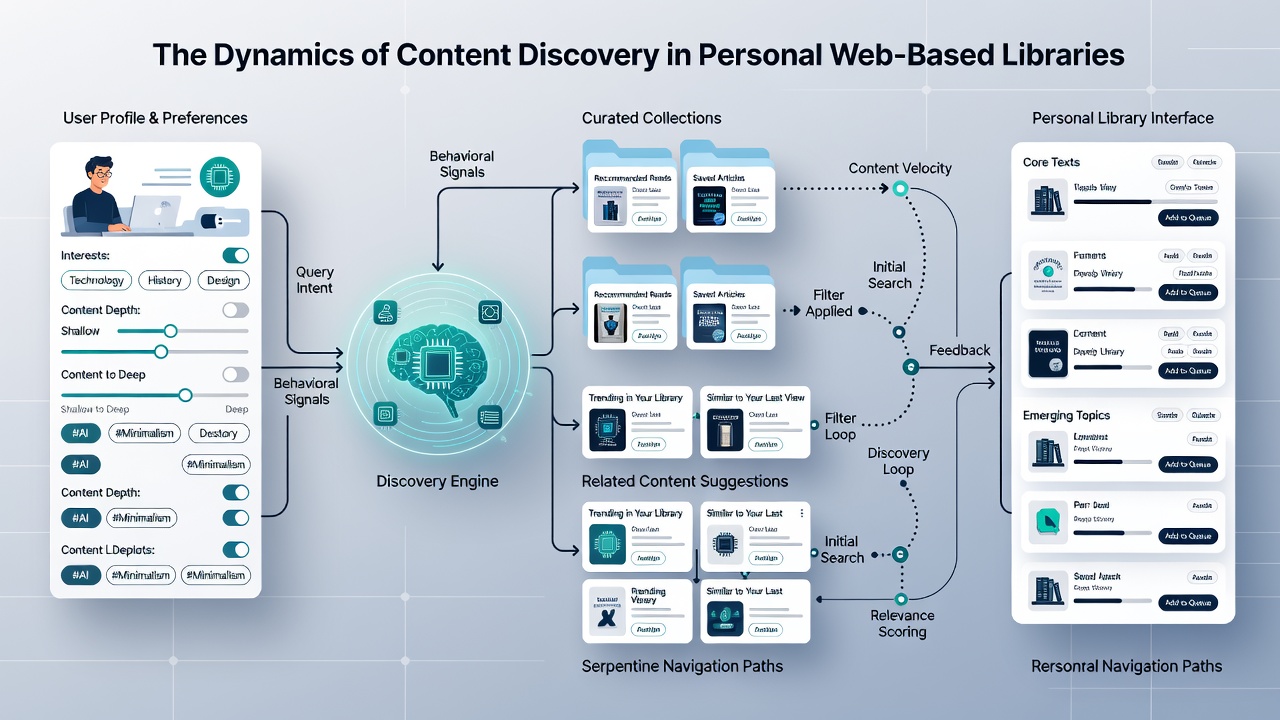
Behavioral data shows that repeated exposure to the same organizational layout strengthens mental models, which in turn speeds up subsequent retrieval tasks. Yet shifts in interface design or the introduction of new discovery tools can temporarily disrupt these patterns until users adapt. Researchers discovered that training modules embedded within the library software help accelerate this adaptation phase by demonstrating filter combinations and graph navigation techniques.
Technological Influences and Emerging Trends
Advances in natural language processing and graph databases continue to reshape discovery capabilities, and integrations with external services allow personal libraries to pull contextual information from public repositories. According to reports from the European Commission on digital heritage initiatives, interoperability standards facilitate smoother data exchange between individual collections and larger networks. This connectivity expands the effective search space without requiring users to duplicate content across platforms.
By November 2026, several open-source projects plan to release updated toolkits that embed machine learning classifiers directly into personal library software, which will automate initial tagging for incoming files. Such developments build on earlier work from institutions like the University of Toronto, where prototypes demonstrated improved recall rates when classifiers trained on user-specific vocabularies rather than generic corpora. Library and Archives Canada has published guidelines on personal digital preservation that emphasize consistent metadata practices as a foundation for future discovery tools.
Challenges in Scaling Discovery
Volume growth presents ongoing difficulties because retrieval performance degrades when collections lack uniform organization principles. Evidence suggests that without periodic audits of tags and relationships, duplicate or near-duplicate items accumulate and dilute search results. Those who maintain large personal libraries report that automated deduplication scripts combined with manual review cycles help maintain clarity over time.
Privacy considerations also intersect with discovery features, since broader indexing can inadvertently expose sensitive files during shared sessions. Guidelines from multiple national archives stress the importance of role-based access controls that limit which metadata fields become searchable by different user groups. These controls allow owners to balance openness within trusted circles against the need to restrict certain categories of content.
Conclusion
The dynamics of content discovery in personal web-based libraries rest on the interplay between user-defined structures, algorithmic assistance, and evolving technical standards. Data from multiple studies confirms that well-maintained metadata paired with flexible search interfaces yields the most reliable outcomes across varying collection sizes. As new toolkits emerge, continued attention to consistent annotation practices and interoperability will determine how effectively individuals can surface relevant materials within their growing digital holdings.